
Why Moss Will Not Grow in Your Australian Garden
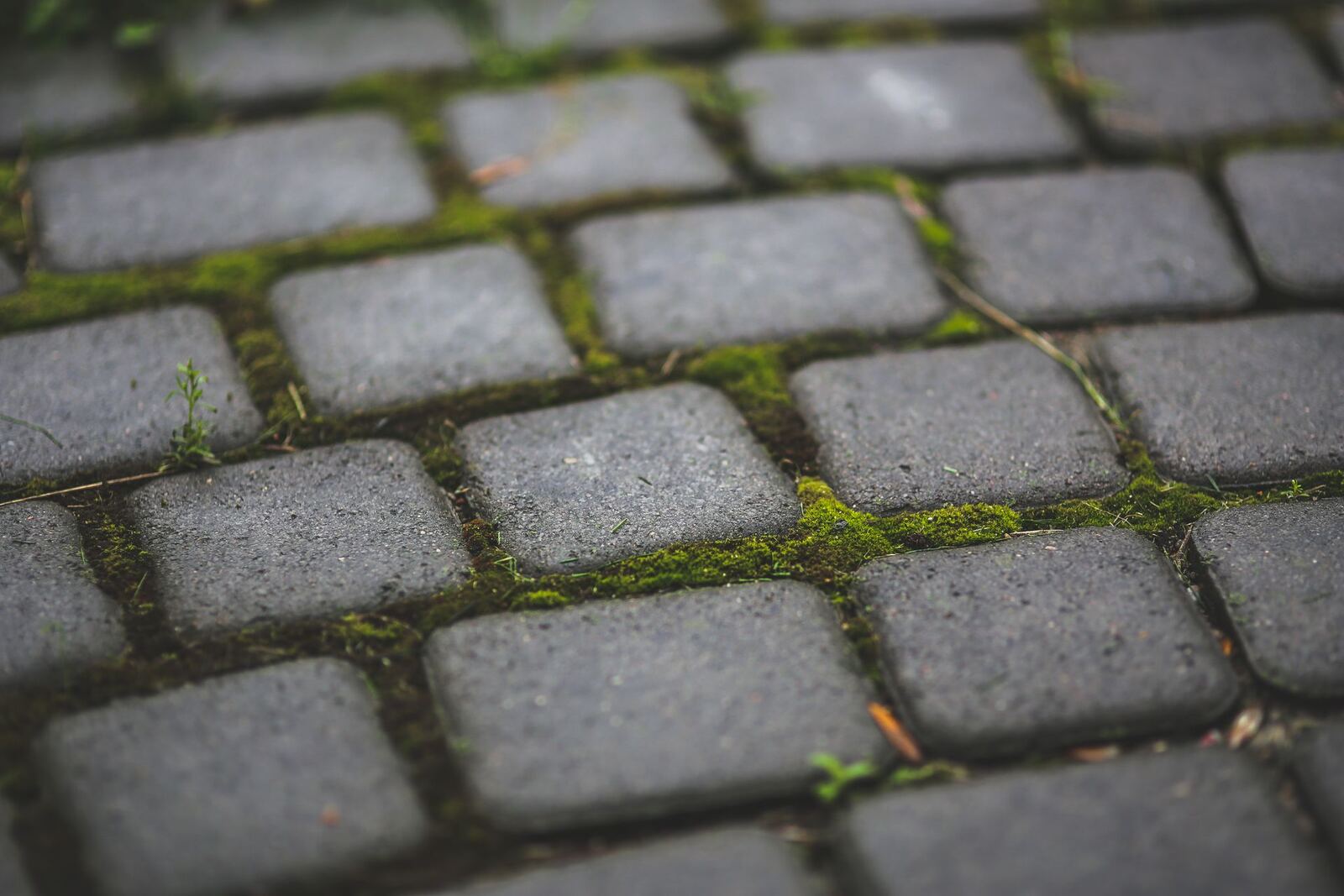
We get asked this more than anything else. Someone has seen a Japanese moss garden, or a photo of a green carpet under a maple, and they want it in their own yard. They ask which moss to buy, how much they will need, and whether any of it will cope with an Australian summer.
The honest answer hurts business, but that's not what we're about. Most moss will not survive being transplanted into your garden, and buying some to try is very likely to end with a patch of brown that washes away in the first heavy rain. But there is a version of this that does work, and it starts with a walk around your own place rather than an order from ours.
Moss has no roots
This is the fact that explains everything else.
Grass, shrubs and trees carry roots that pull water and nutrients up from deep in the soil, which is why you can plant them into a spot they have never grown in and expect them to establish. Moss has none of that. What look like tiny roots are rhizoids, and they do one job, holding on. Every drop of water a moss uses, and every scrap of nutrient, is absorbed straight through its surface from the air and the rain that touch it.
So a moss does not live in the soil. It lives in the few centimetres of air sitting on top of the soil, and it is entirely at the mercy of the shade, humidity and moisture of that exact spot. Move it two metres into the sun and you have not relocated a plant. You have removed its whole water supply.
The consolation is that moss is patient. It dries out, goes dormant and waits, sometimes for months, and greens up again within minutes of the next rain. That is a survival strategy, not a growth strategy. A moss spends most of a hot Australian summer holding its breath.
The moss chooses the spot, not you
Follow that through and you arrive at the thing worth knowing.
If moss is already growing somewhere in your garden, that spot has told you it can support moss. Between the pavers, along the base of a north wall's shadow, on the shaded side of a fence, on the damp bricks under the tap, on the south face of a tree trunk. Those places already have the conditions.
And if there is no moss anywhere on your block, that is data too. It usually means the shade is not deep enough, the air is not humid enough, or the surface dries too fast between rains. Bringing moss in does not change any of that. It just puts a living thing somewhere it cannot drink.
Hence the rule we keep coming back to. If it is not already growing in your garden, it probably cannot.
There is a genuine exception, and it is a large one. Through the high country of the southeast, the wet forests of the Dandenongs and the Otways, the Southern Highlands, and most of Tasmania, moss grows so readily that the problem reverses. There the moss arrives whether you invited it or not, and gardeners spend their time scrubbing it off the path. If that is where you live, ignore everything above. You do not need to buy moss. You need to send it our way so we can share it with everyone else!
For the rest of the country, and for most of suburban Melbourne, Sydney and Brisbane, the rule holds.
Full sun is a no, and we will not pretend otherwise
Nothing in our range will give you a moss lawn in full Australian sun. Not fern moss, not feather moss, not cushion moss. The species sold as sun tolerant overseas are working with northern hemisphere light and northern hemisphere humidity, and a January afternoon in Melbourne is a different proposition entirely.
A moss lawn in this country is a shade project. Deep shade, reliable moisture, protection from wind, and patience measured in seasons. If your yard has that, you are already most of the way there. If it does not, no purchase will manufacture it.
What actually works: grow what already grows
Here is the version we would try ourselves.
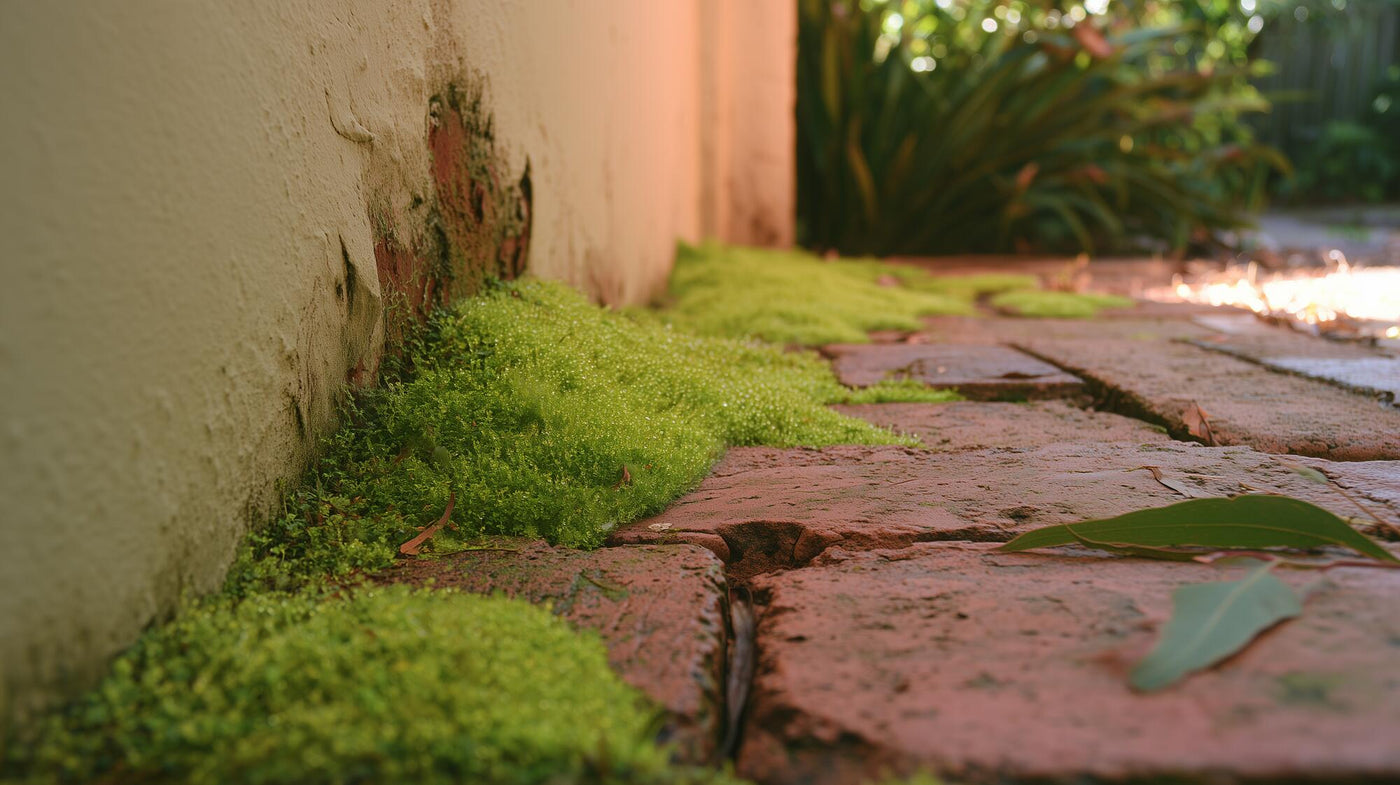
Walk your garden after rain and find the moss that is already there. The shaded southern side of a wall or fence is the first place to look, since the sun tracks across the northern sky and that strip stays cool. Then look under the eaves, between the pavers, at the base of trees, anywhere that stays damp a day longer than everywhere else.
That moss has already proven it belongs. So propagate that, and nothing else.
Take a small handful, no more than a quarter of any patch so it can regenerate. Blend it with a cup of buttermilk or plain yoghurt and a splash of water, in short bursts, until it is a rough paste rather than a smoothie. A few seconds too long and you have destroyed the fragments you are trying to spread.
Paint the paste onto the surface you want colonised, choosing somewhere with the same light and moisture as the place you took it from. Mist it daily for a month. Keep it out of the sun. Then wait, because moss keeps its own calendar, and a good result is measured in months.
This works because you have not asked a plant to adapt. You have simply given more room to something that had already chosen your garden.
We should be straight about one thing. The paste method is a technique, not a guarantee, and results vary between species and sites. We are still running our own trials on it. What we can tell you is that it fails for the same reason everything else fails, which is putting moss where the conditions are wrong.
Where our moss belongs
None of this makes our moss useless to you. It makes it useful somewhere else.
Inside a terrarium, in a sealed jar, in a shaded corner of a vivarium or under a bell jar on a desk, you are not fighting the climate. You are building the climate. Humidity holds, light stays soft, and the moss does not have to survive an Australian summer because it will never meet one.
That is where fern moss and feather moss do their best work, and that is who we forage for. Living worlds in glass, not carpets in the yard.
If you want a green garden floor, go outside, find what is already growing, and give it more room. If you want a living world you can hold in your hands, that is our part.